
Land Clearing and Stump Removal in Mount Hawthorn
Cleared and levelled a subdivision block in Mount Hawthorn, including stumps sitting about two inches off an existing driveway that had to survive the job.
Call Us Now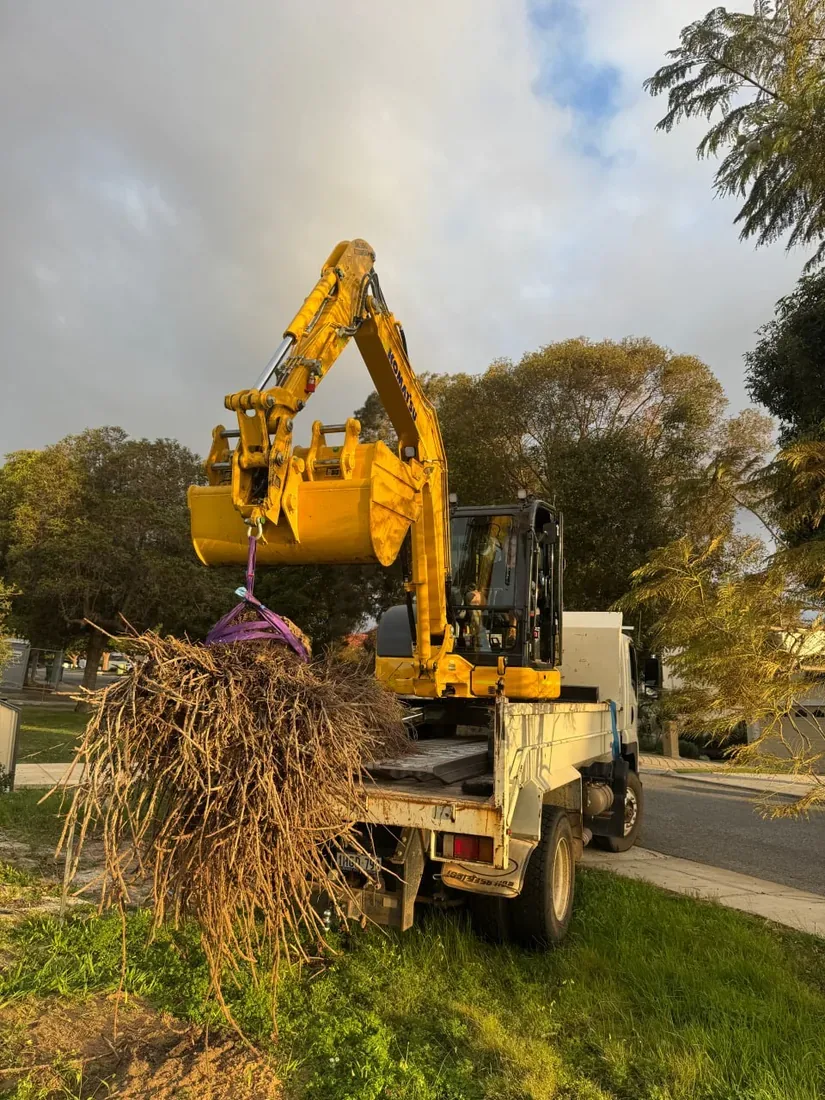
The Job File
- Job type
- Land clearing, tree stump removal and levelling
- Site
- New residential subdivision, Mount Hawthorn
- For
- A residential building company
- Machine
- Komatsu PC55, 5.5 tonne excavator
- Cartage
- 8 tonne tipper, spoil and stump waste off site
- The catch
- Stumps roughly two inches off an existing driveway foundation
- Handed back
- Stumps out, block levelled, driveway undamaged
A builder needs a block that is clear, level and ready to set out on. This one had a run of tree stumps sitting hard up against the foundation of an existing driveway, which changes stump removal from a pulling job into a digging job.
What Made This Mount Hawthorn Block Awkward
Clearing a subdivision block is usually straightforward. Take the vegetation off, get the stumps out, level the site, hand it over ready for set-out.
What made this one different was where the stumps were. A run of them sat roughly two inches off the foundation of a driveway that was staying. Two inches is close enough that the stump and the driveway are effectively sharing ground.
Two Inches Is a Different Job, Not a Harder Version of the Same One
A stump in open ground and a stump against a slab are removed by different methods. The first is about speed. The second is about not transmitting any load into the thing next to it. Quoting the second as if it were the first is where driveways get cracked.
Why a Stump Close to a Slab Cannot Just Be Pulled
A Stump Two Inches Off A Driveway
Why the fast method is the one that cracks the slab.
They Share The Ground
Two inches off the edge, the roots have run under the driveway and the compacted base is packed around them. The stump and the slab are holding the same ground.
A Straight Pull Cracks It
Concrete has almost no tolerance for being lifted unevenly from below. Take the stump up in one and the slab edge comes with it, and it cracks along its weakest line.
Cut First, Then Move It
The roots running under the driveway are severed at the boundary before anything is lifted. From there the stump only has to move away from the slab, not up through it.
The fast way to take a stump out is to get under it and lift. The machine breaks the tap root and the whole plate comes up in one.
The problem is what a root plate is attached to. It is not a ball sitting in a hole, it is a web of roots running out sideways through the surrounding soil, often further than the canopy ever reached. Lift the stump and you lift everything those roots are tied into, which includes the ground packed under the edge of a driveway two inches away.
Concrete has almost no tolerance for being lifted unevenly from below. A driveway that is perfectly sound will crack along its weakest line if one edge is raised even slightly, and it will usually crack after the machine has gone, which makes it somebody's word against somebody else's.
Working Next to Something That Has to Survive
The rule on a job like this is that the existing structure sets the method, not the other way round. Once you accept the driveway cannot take any load, the sequence follows on its own: expose before you lift, cut what is holding, and take the stump out in pieces if that is what it needs.
It is slower on the day. It is considerably cheaper than the alternative, because the alternative is a driveway repair and an argument about who pays for it.
Worth Agreeing Before the Machine Turns Up
Which existing structures are staying, and what condition they are already in. Cracks that were there beforehand are much easier to talk about when someone has looked at them beforehand.
How We Did It, Step By Step
The order matters more than the machine. This is how a job like this gets approached.
- 01
Walk the Block and Mark What Stays
Driveway, paths, any services and any established trees the builder is keeping. Everything after this is decided by what is on that list.
- 02
Clear the Vegetation First
Get the above-ground material off so you can actually see the ground you are working, and so the stumps are the only thing left to deal with.
- 03
Expose the Stumps Closest to the Driveway
Dig around the plate rather than under it. Exposing first means you can see which roots run toward the driveway before anything is under load.
- 04
Cut the Roots, Then Work the Stump Back
Sever what is holding it and take it out gradually with the PC55, so the surrounding ground is never being lifted as a slab.
- 05
Load Out as You Go
Stump waste and spoil onto the 8 tonne tipper as the work goes, so the block does not fill up with material that then has to be handled a second time.
- 06
Level and Hand Back
Track the block out to a level, consistent surface the builder can set out on, and walk the driveway before leaving.
Questions About Jobs Like This
Yes, but not by pulling it. It gets excavated around, the roots get cut, and the stump comes back gradually so nothing lifts the ground the slab is sitting on. It takes longer than an open-ground stump and it is worth saying so in the quote.
Grinding takes the stump down below the surface but leaves the root system in the ground. That is fine for a lawn. On a block about to be built on, the roots are still there to rot and settle later, so on a subdivision they usually come out.
Either. On this one it went out on our 8 tonne tipper as the work went. Carting as you go suits a block with no room to stockpile; leaving it suits a site where the material is being reused.
Level enough to set out on. The block gets tracked out to a consistent surface without soft spots or buried timber, which is what causes problems once footings go in.
AI Overview
Some of the stumps sat about two inches off the foundation of an existing driveway, so they had to be excavated around rather than pulled. Stumps out, block levelled and handed back ready for the builder, with the existing driveway undamaged.
Key Highlights
- Land clearing, stump removal and levelling on a Mount Hawthorn subdivision
- Komatsu PC55 with an 8 tonne tipper carting as the work went
- Stumps sat about two inches off an existing driveway foundation
- Excavated around rather than pulled, so the driveway was not loaded
- Block handed back level and ready for set-out
- Spoil removed as it was dug, so the block stayed workable
Summarise This Job With AI
Open this job in your AI assistant for a plain-language summary and a straight answer on whether the same approach suits your site.
What This Job Involved

Wet Hire Perth
Wet hire in Perth - machine plus trained operator on site. Komatsu excavators, bobcats and tippers available. Call us direct for a fast quote.
Wet Hire Perth
Excavation & Earthworks Perth
Excavation and earthworks across Perth - site cuts, house pads and bulk earthmoving. Komatsu excavators with trained operators. Get a fast quote.
Excavation & Earthworks Perth
Excavator Hire Perth
Excavator hire Perth - Komatsu PC18, PC55 and PC138 diggers. Wet hire with operator or dry hire. All sizes on site fast. Call us now.
Excavator Hire Perth
Tipper Truck Hire Perth
Tipper truck hire Perth - 8t Isuzu FVR for soil, sand and spoil cartage. Pair with an excavator for a full dig-and-cart solution. Call us.
Tipper Truck Hire PerthOther Past Jobs
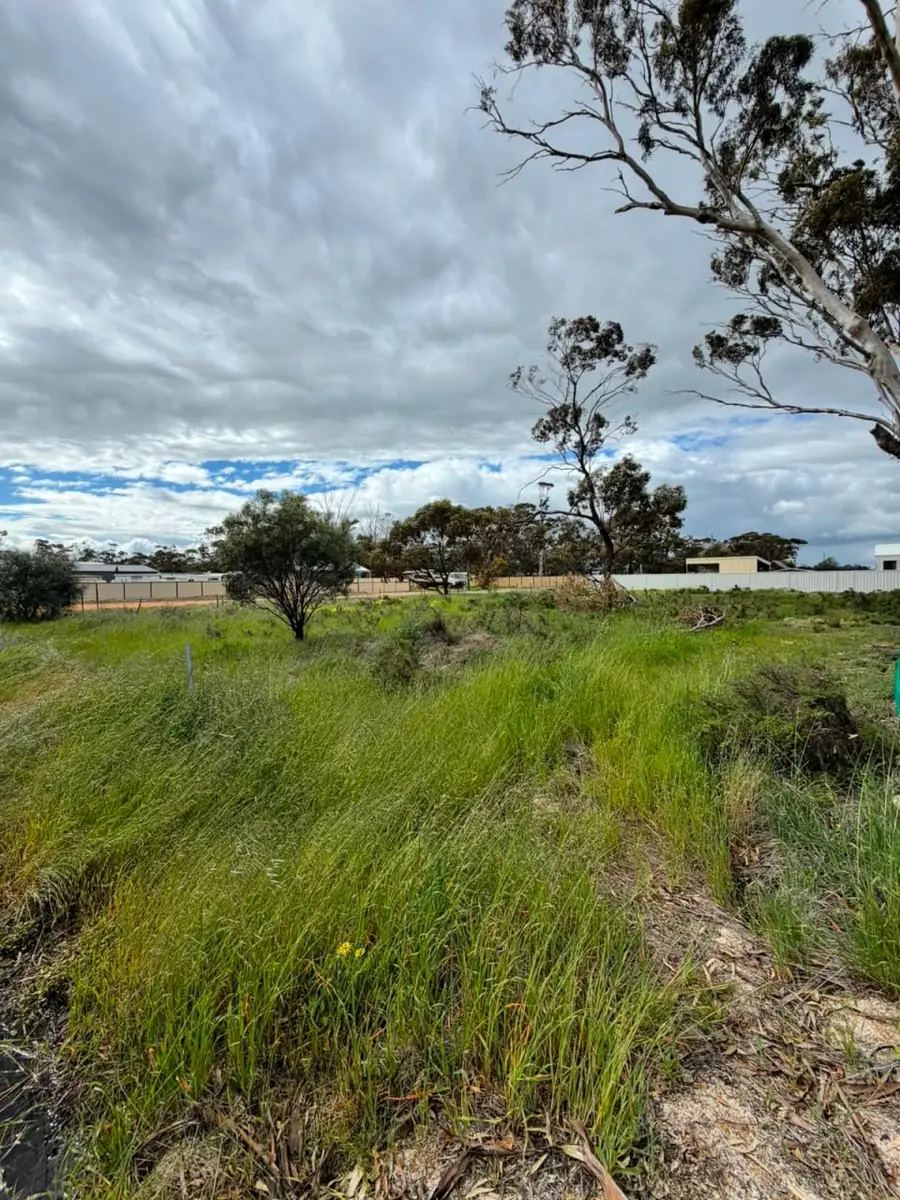
Three Acres of Land Clearing in Gingin
Three acres of grass, scrub and gum trees at Gingin taken back to bare dirt. Posi-track for the bulk, 5.5 tonne excavator on the stumps, tipper carting the spoil and the rubbish off as it came up.
Read The Job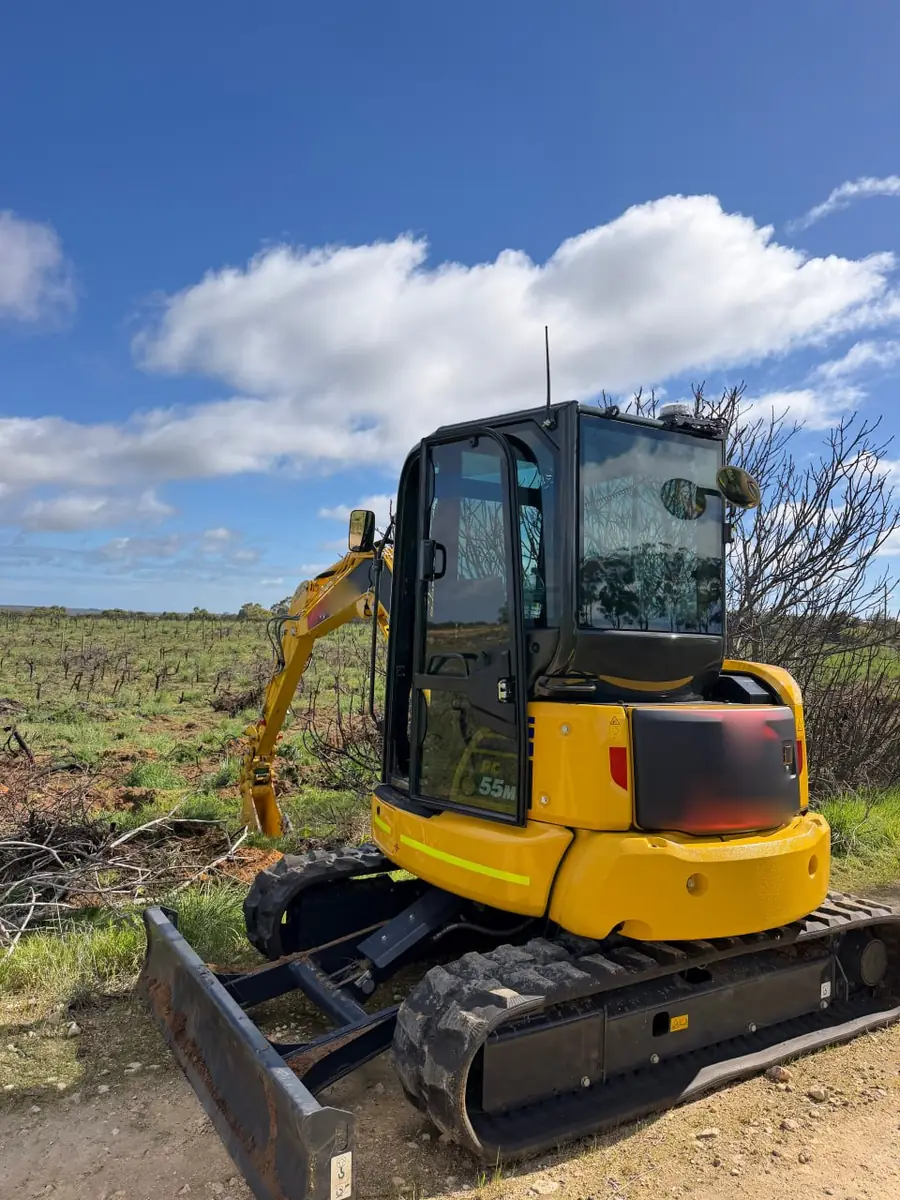
Two Acres of Vineyard Removal in Gingin
Took out roughly two acres of disused vineyard at Gingin and levelled the site off so the owner could put retic in and grass it over.
Read The Job
Tight Access Trenching in Peppermint Grove
Trenching for a plumbing line and a reticulation water system, right around a property whose only entry was a gap the machine had to narrow to roughly 990mm to pass.
Read The JobGot A Job Like This One?
We prefer calls, get straight through to the team. Reliable machines. Experienced operators. Jobs done right.