
Three Acres of Land Clearing in Gingin
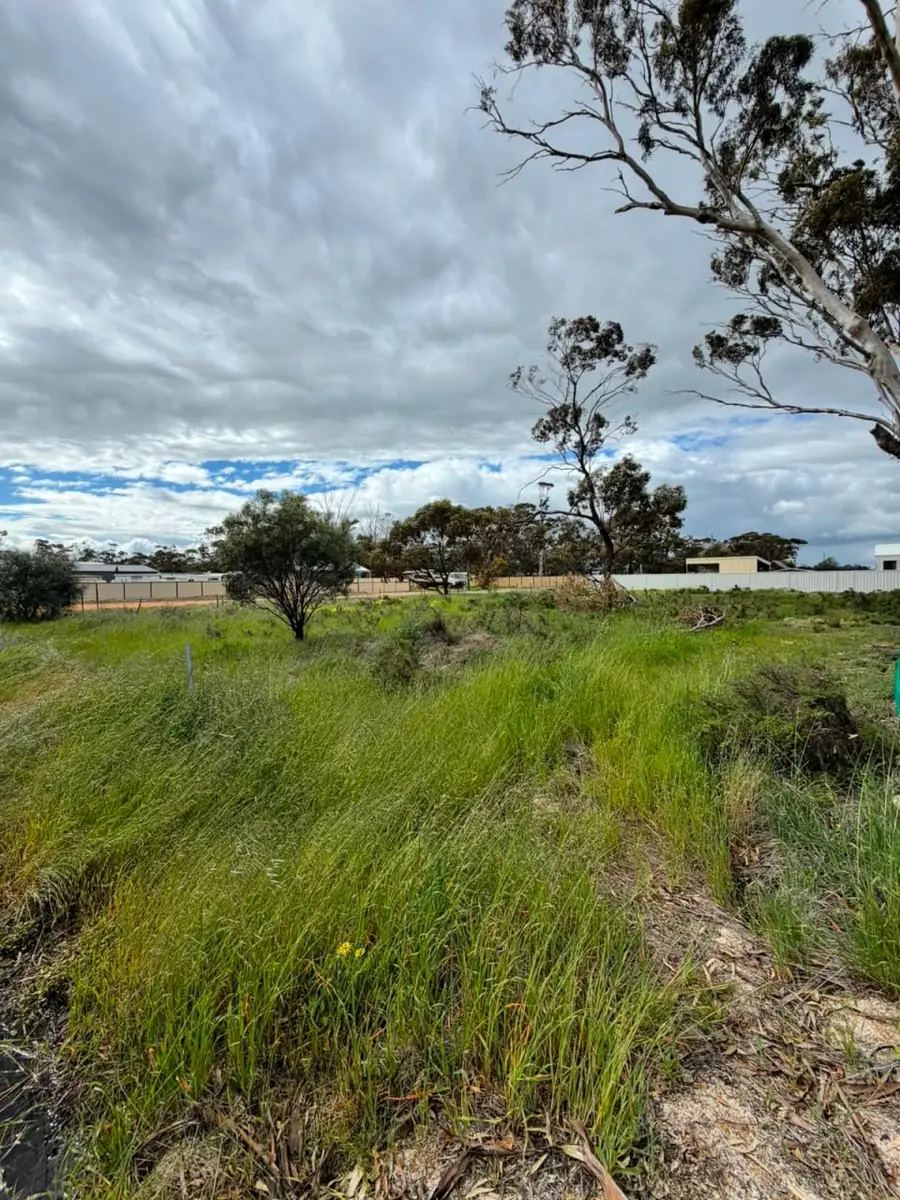
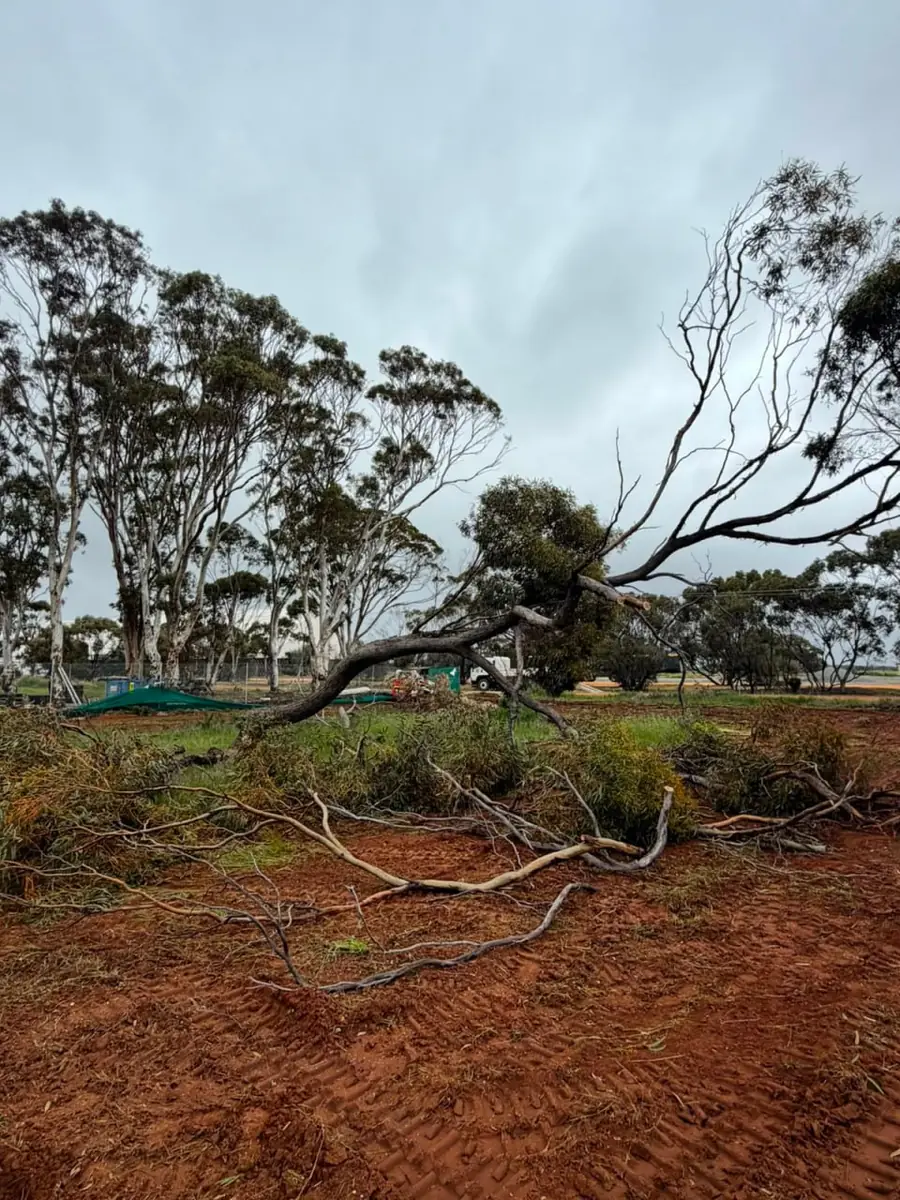
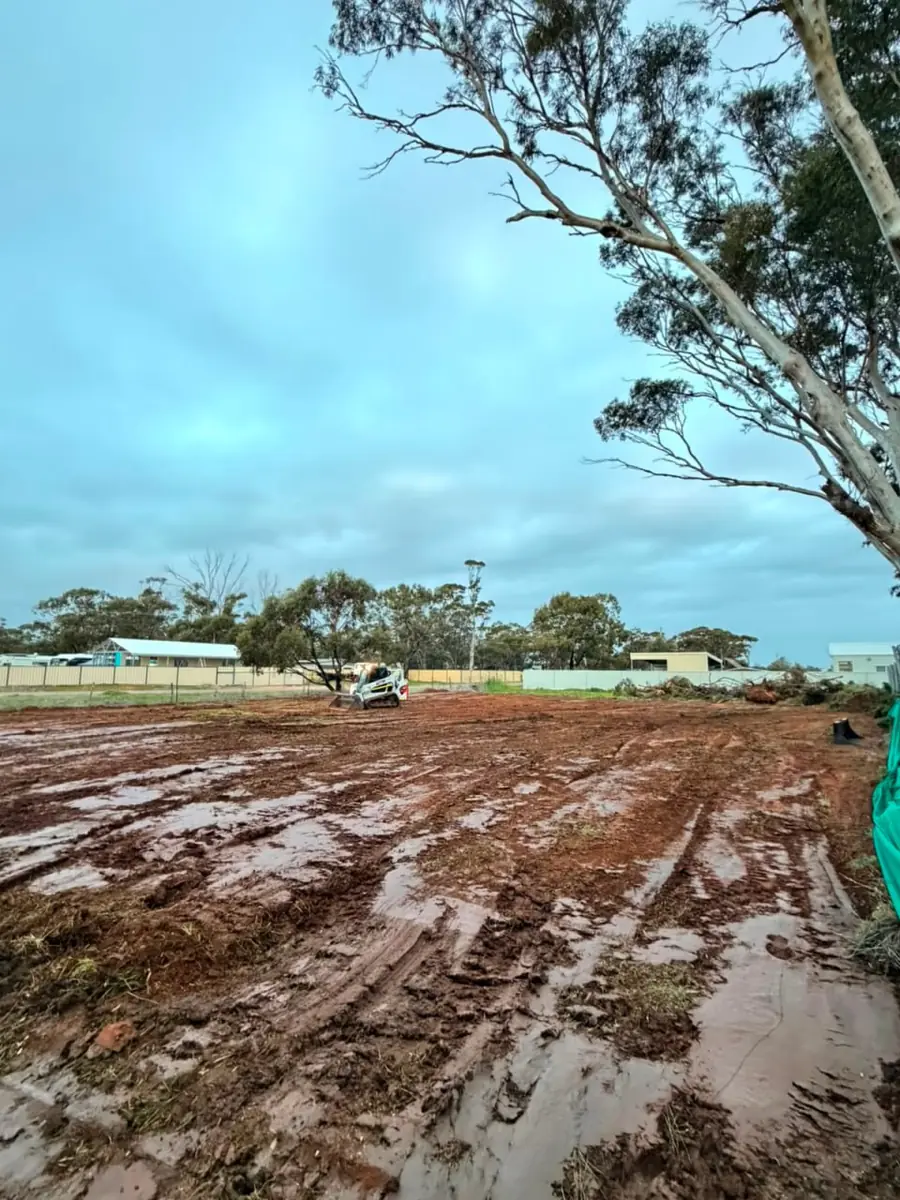
Three acres of grass, scrub and gum trees at Gingin taken back to bare dirt. Posi-track for the bulk, 5.5 tonne excavator on the stumps, tipper carting the spoil and the rubbish off as it came up.
Call Us Now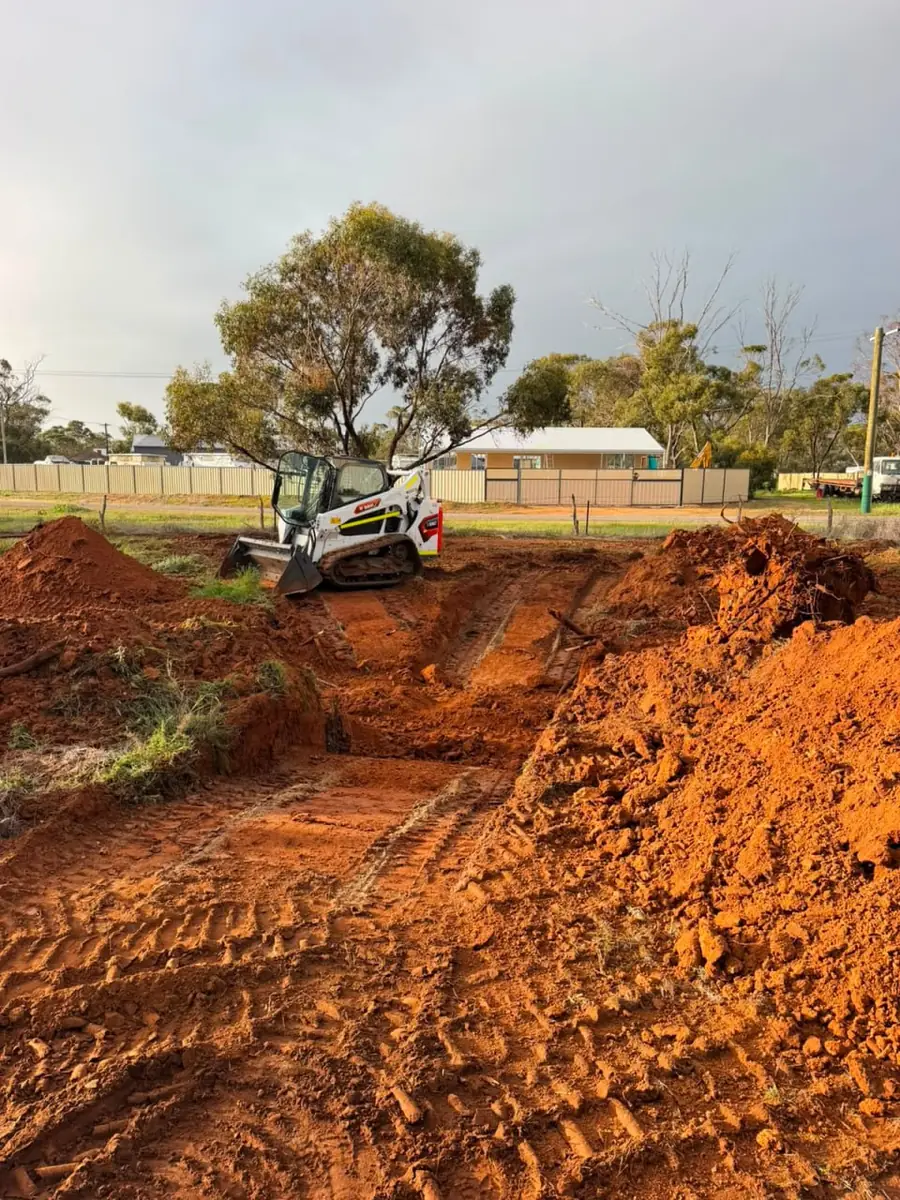
The Job File
- Job type
- Land clearing, stump removal and site strip
- Area
- Three acres, Gingin
- For
- A private landowner
- Machines
- Posi-track Bobcat, 5.5 tonne excavator, 13.8 tonne with a rock breaker
- Attachment
- 4-in-1 bucket on the excavator for scraping rubbish up
- The catch
- Hard rock around some of the stumps, broken out before they would lift
- Cartage
- Tipper, spoil and rubbish off site
- Handed back
- Block cleared, stumped and stripped to a working surface
A block this size is not one machine's job. The posi-track does the ground work and the running around, the excavator does the stumps, and the tipper decides how fast the whole thing actually moves. Get the order wrong and you spend the day driving over material you are about to have to pick back up.
Why Clearing Three Acres Takes Two Machines, Not One
A posi-track is the right machine for covering ground. It floats on tracks instead of digging into soft going, it turns in its own length, and it pushes and carries all day without chewing the surface up. On three acres of grass and scrub that is most of the work.
What it will not do is pull a stump. A stump is a pulling and levering job, and that wants an excavator with reach and a bit of weight behind it. Trying to push stumps out with a loader either fails or turns into a hole you then have to fix.
So the two machines split the job. The loader clears and strips, the excavator follows behind and deals with anything with roots on it. That is why the clearing quote on an acreage block usually has two machines in it, and why one machine on its own is nearly always slower rather than cheaper.
Clearing and Stumping Are Two Different Jobs
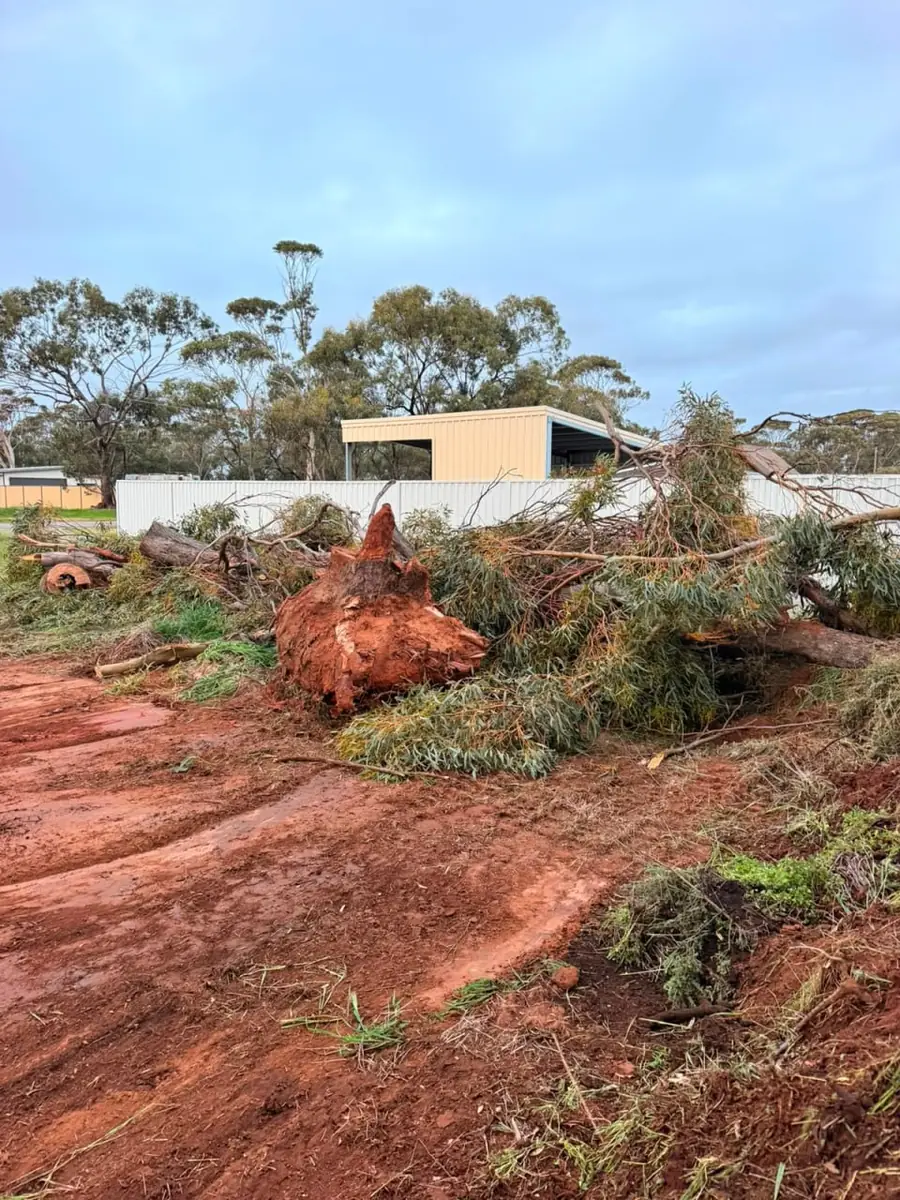
Clearing takes what is above the ground. Stumping takes what is under it. A block that has only been cleared looks finished right up until someone tries to put footings in or run a mower over it.
The Topsoil Came Off First, Then It Left the Block
The first thing off a block like this is the top layer. It gets stripped and pushed into a windrow along one side, clear of the machines, before any of the heavy work starts.
On this one it did not stay. Once it was windrowed it was loaded out with everything else and carted off site.
It still comes off separately rather than being mixed through the spoil as you go. Working over a blend of turf, root mat and dirt is slow, and you cannot see what you are digging. Strip it first and the rest of the block is consistent ground underneath.
Windrowing It Is Not the Same as Keeping It
The topsoil comes off into a windrow either way, because that is how you get a clean surface to work on. Whether it then stays on site or leaves on the tipper is a separate call, and one worth making before the quote rather than on the day. On this block it left.
Why Rubbish on a Block Has to Leave Separately
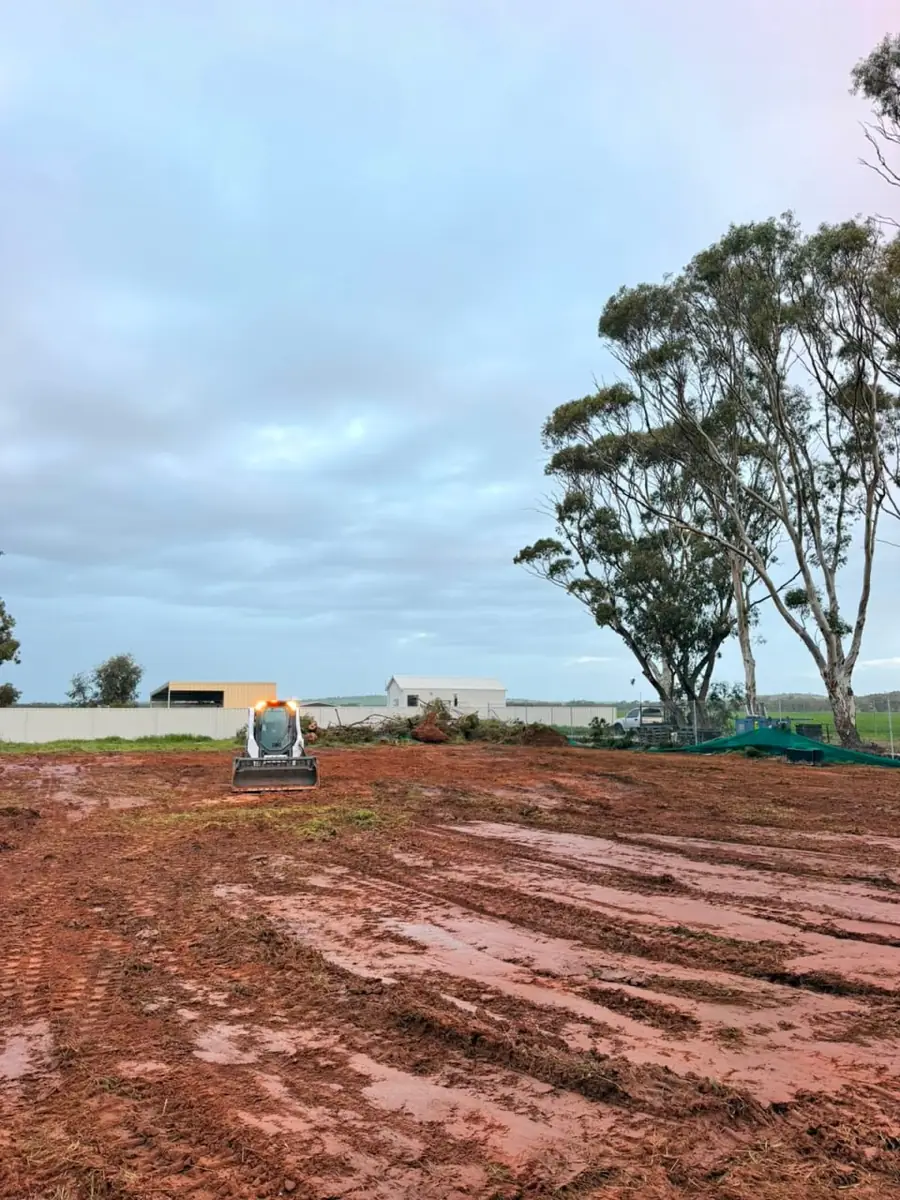
There was loose rubbish scattered through this one, which is normal on a block that has sat for a while. It cannot go out with the clean spoil, because the moment rubbish is mixed through a load the whole load is contaminated and it costs more to get rid of.
The 4-in-1 bucket on the excavator is what makes that quick. It opens up, so it will scrape and grab loose material off the surface instead of just pushing it around, and it will lift a mixed pile cleanly enough to drop it straight into the tipper.
That is the difference between picking rubbish up and chasing it. Without a bucket that opens, loose material gets pushed along the ground, half of it gets trodden in, and someone ends up doing it by hand.
Why the 4-in-1 Earns Its Keep Here
A standard bucket digs. A 4-in-1 digs, grabs, and can push with the blade closed, so one machine handles stumps, loose rubbish and levelling without swapping attachments every twenty minutes.
Stump Removal Where There Is Rock Around the Roots
A Stump In Rock Is A Different Job
The hammer goes on before anything gets lifted.
It Is Not Sitting in Dirt
Hard rock is wrapped around the root plate. Lift on it and the roots shear off at the rock line, leaving the worst of the stump still in the ground.
Break the Rock, Not the Stump
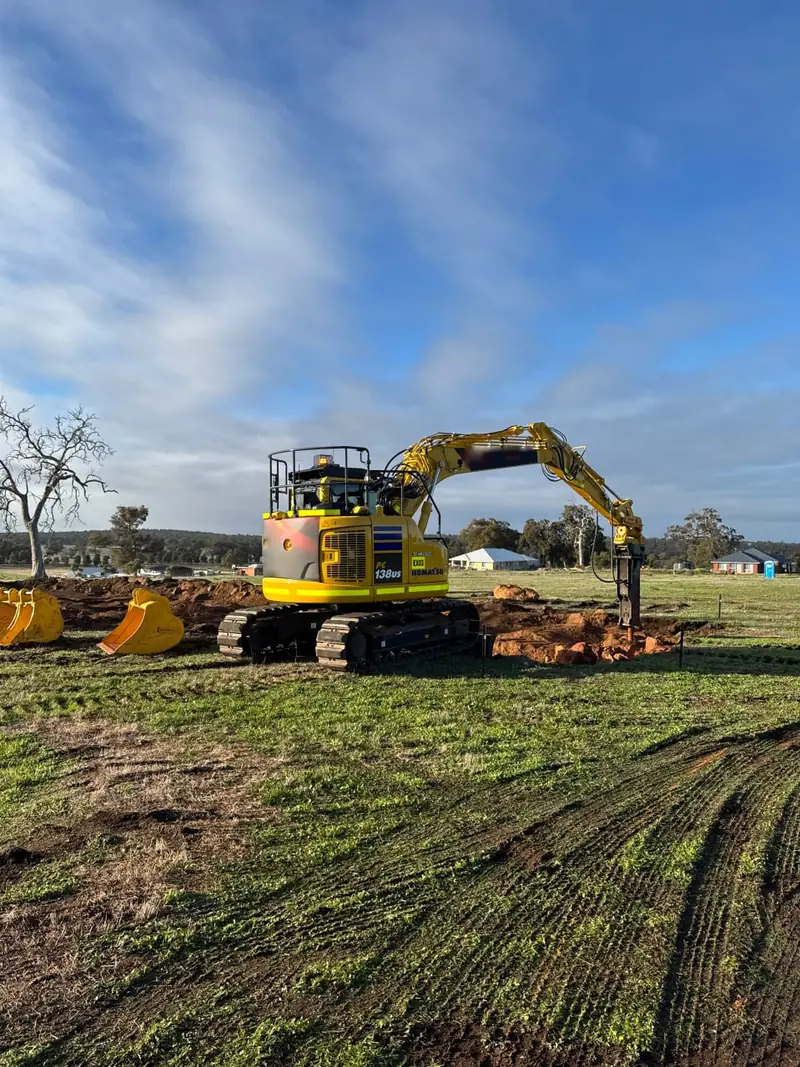
The 13.8 tonne goes on with a rock breaker and the rock around the roots is broken out first, so there is somewhere for the root plate to move to.
Then It Lifts Out Whole
With the rock broken the stump comes up with its root plate still on it. Nothing is left under the surface to settle later or come up under a mower.
Not every stump comes out of dirt. Through part of this block there was hard rock sitting around the root systems, and once a stump is locked into rock, pulling harder is not the answer. All that does is snap the roots off and leave the worst of it still in the ground.
So the rock gets broken first. A hammer goes on the excavator, the rock around the stump is broken up, and then the stump lifts the way it should, with its root plate rather than without it.
It is worth knowing before the quote, because it changes the machine and it changes the day. A stump in sand is quick. The same stump sitting in rock is a different job, and finding that out halfway through is how a fixed price turns into an argument.
Why You Break the Rock Instead of Pulling Harder
Force a machine cannot put through the stump has to go somewhere, and it usually goes into the machine. The other outcome is snapped roots left in the ground, and those are the ones that settle under a slab or come up under a mower two years later.
Why the Order of Work Decides How Long a Clearing Job Takes
Clearing a block is mostly a materials-handling problem. Every heap you make is a heap you have to move again, so the job is planned backwards from where the tipper can get in and turn around.
Vegetation comes off first, then the topsoil, then the stumps, then the surface gets tracked out. The tipper loads as the work goes rather than at the end, which keeps the block open and stops the whole thing turning into a maze of stockpiles.
Done in that order three acres is a straightforward job. Done in the wrong order, the same block eats days while machines drive around their own spoil.
How We Did It, Step By Step
The order matters more than the machine. This is how a job like this gets approached.
- 01
Walk the Block and Mark What Stays
Trees that are staying, fence lines, any services, and where the tipper can get in and turn. Everything after this depends on knowing where material is allowed to go.
- 02
Clear the Vegetation With the Posi-Track
Grass, scrub and undergrowth pushed up and heaped clear of the working area, so the ground underneath is visible before anything heavier starts.
- 03
Strip the Topsoil and Windrow It
The top layer pushed into a windrow along one side of the block, clear of the working area. On this job it was carted off later rather than kept.
- 04
Pull the Stumps With the Excavator
The 5.5 tonne works each stump loose and lifts it out with its root plate rather than snapping it off, so nothing is left in the ground to settle later.
- 05
Break the Rock Where There Is Rock
Where a stump is sitting in hard rock, the hammer goes on and the rock around the roots is broken up first, so the stump can actually move when it is lifted.
- 06
Scrape the Rubbish Up With the 4-in-1
Loose rubbish gathered off the surface and lifted into the tipper separately from the clean spoil, so the loads stay clean and the tip fees stay sane.
- 07
Cart Out as the Work Goes
Spoil, stumps and rubbish loaded onto the tipper and taken off site through the job rather than stockpiled, so the block stays open to work on.
- 08
Track the Surface Out and Hand Back
The block tracked over to a consistent, workable surface, with the topsoil, spoil and rubbish already gone rather than heaped in a corner.
More From This Job
The rest of the frames off this one. Swipe or use the arrows, and tap any photo to open it full screen.
Questions About Jobs Like This
It can be either, and it is worth deciding before the quote. Clearing takes the vegetation off the surface. Stump removal takes the root systems out of the ground. A block that is only cleared looks finished but still has stumps in it, which matters the moment anyone builds, fences or mows.
It gets stripped off and windrowed along one side before the heavy work starts, so the block underneath is clean to work on. Whether it then stays or goes is a separate decision. On this job it went, carted off site with the rest of the spoil.
Yes, and it goes separately from the clean spoil. Mixed loads cost more to dispose of, so loose rubbish gets scraped up with the 4-in-1 and loaded on its own.
Three acres is comfortable with a loader, an excavator and a tipper working together. Past that it is not a different job, it is just more days and more cartage, and the cartage is usually what sets the price rather than the clearing.
AI Overview
The block carried grass, scrub, gum trees with stumps to come out, and loose rubbish scattered through it, all of which have to leave in different ways. Some of the stumps also had hard rock around the roots that had to be broken before they would move. Block cleared and stripped back to a working surface, stumps out, and the topsoil, spoil and rubbish all carted off rather than pushed into a corner.
Key Highlights
- Three acres of Gingin acreage cleared, stumped and stripped
- Posi-track on the bulk clearing and the topsoil strip
- 5.5 tonne excavator pulling the stumps out root and all
- Hard rock around some stumps, broken out with a hammer before they would lift
- Topsoil stripped into a windrow first, then carted off with the spoil
- 4-in-1 bucket used to scrape loose rubbish up for the tipper
- Spoil and rubbish carted off site rather than stockpiled
Summarise This Job With AI
Open this job in your AI assistant for a plain-language summary and a straight answer on whether the same approach suits your site.
What This Job Involved

Wet Hire Perth
Wet hire in Perth - machine plus trained operator on site. Komatsu excavators, bobcats and tippers available. Call us direct for a fast quote.
Wet Hire Perth
Excavation & Earthworks Perth
Excavation and earthworks across Perth - site cuts, house pads and bulk earthmoving. Komatsu excavators with trained operators. Get a fast quote.
Excavation & Earthworks Perth
Rock Breaking Perth
Rock breaking Perth using hydraulic hammer on Komatsu excavators. Limestone, hard ground and concrete. Trained operators. Call us now.
Rock Breaking Perth
Excavator Hire Perth
Excavator hire Perth - Komatsu PC18, PC55 and PC138 diggers. Wet hire with operator or dry hire. All sizes on site fast. Call us now.
Excavator Hire Perth
Skid Steer Hire Perth
Skid steer hire Perth. Tracked and wheeled loaders with a 4-in-1 bucket as standard, wet or dry hire. We match the machine to your ground, call now.
Skid Steer Hire Perth
Tipper Truck Hire Perth
Tipper truck hire Perth - 8t Isuzu FVR for soil, sand and spoil cartage. Pair with an excavator for a full dig-and-cart solution. Call us.
Tipper Truck Hire PerthOther Past Jobs
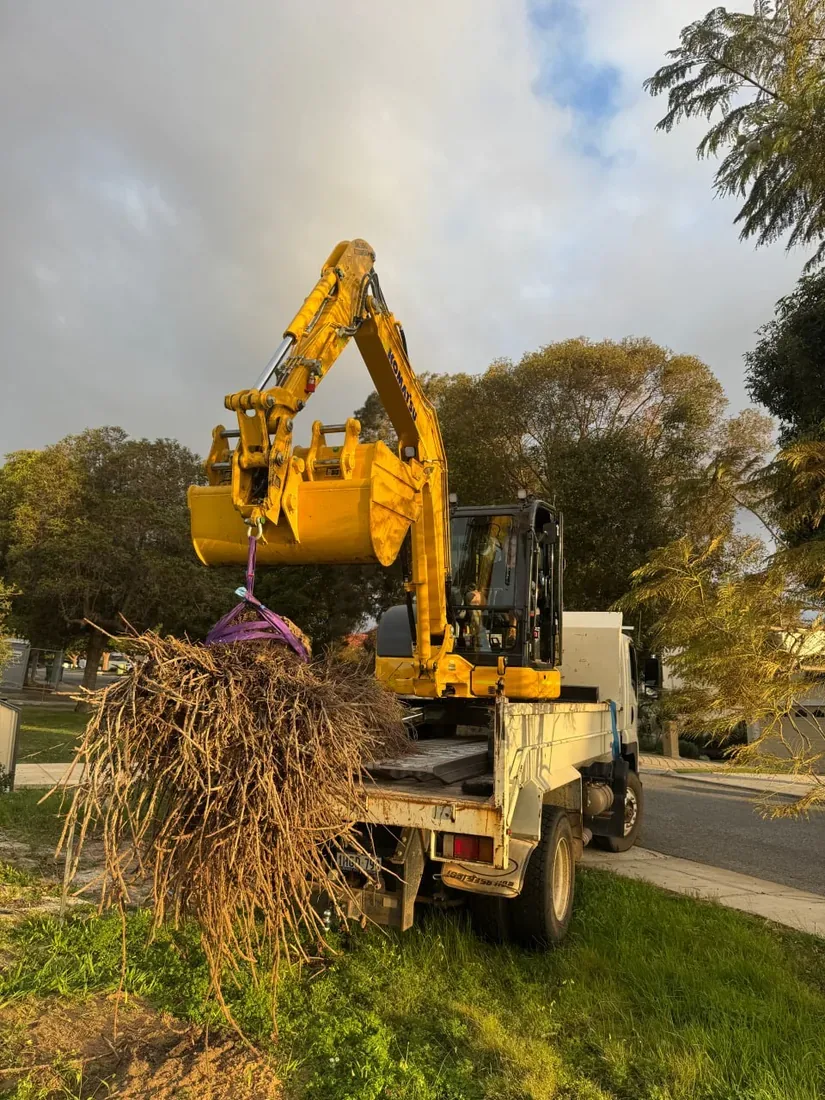
Land Clearing and Stump Removal in Mount Hawthorn
Cleared and levelled a subdivision block in Mount Hawthorn, including stumps sitting about two inches off an existing driveway that had to survive the job.
Read The Job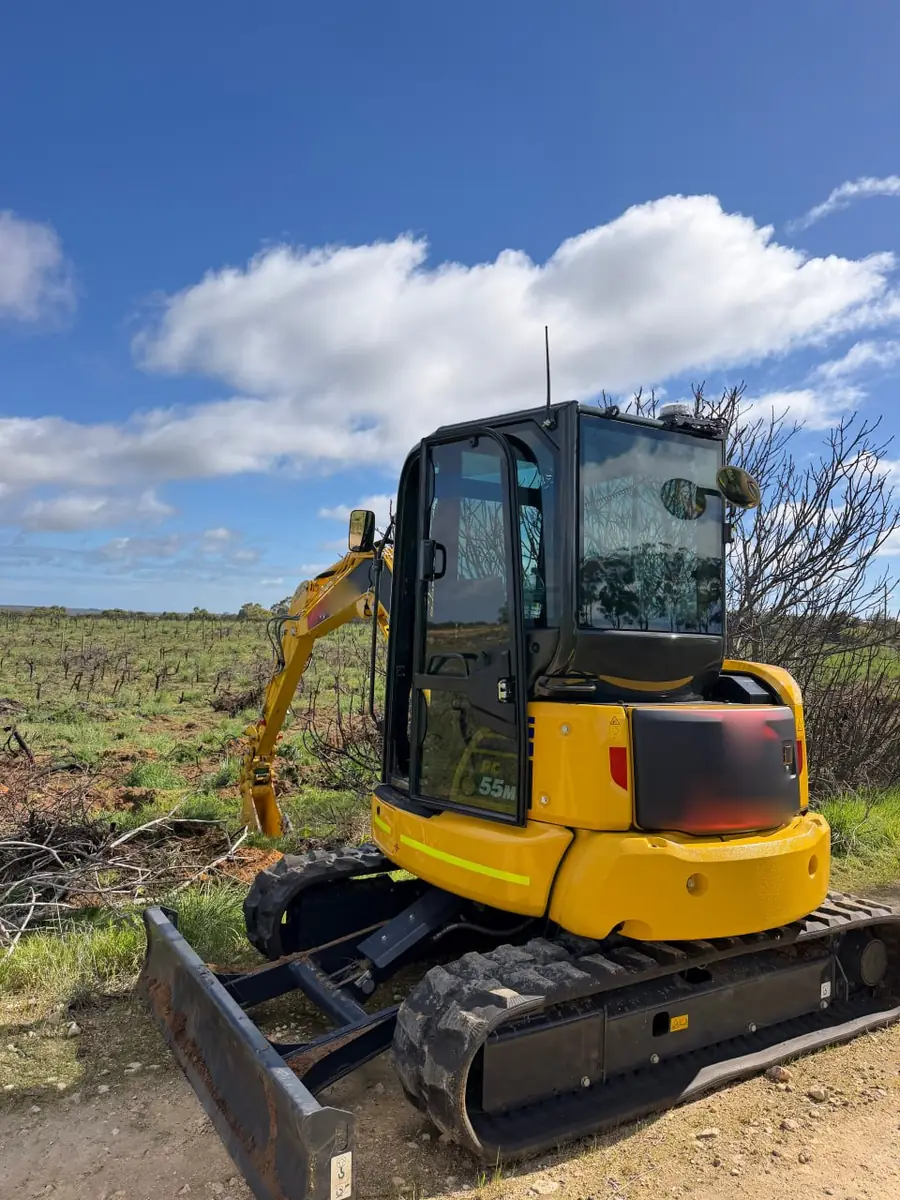
Two Acres of Vineyard Removal in Gingin
Took out roughly two acres of disused vineyard at Gingin and levelled the site off so the owner could put retic in and grass it over.
Read The Job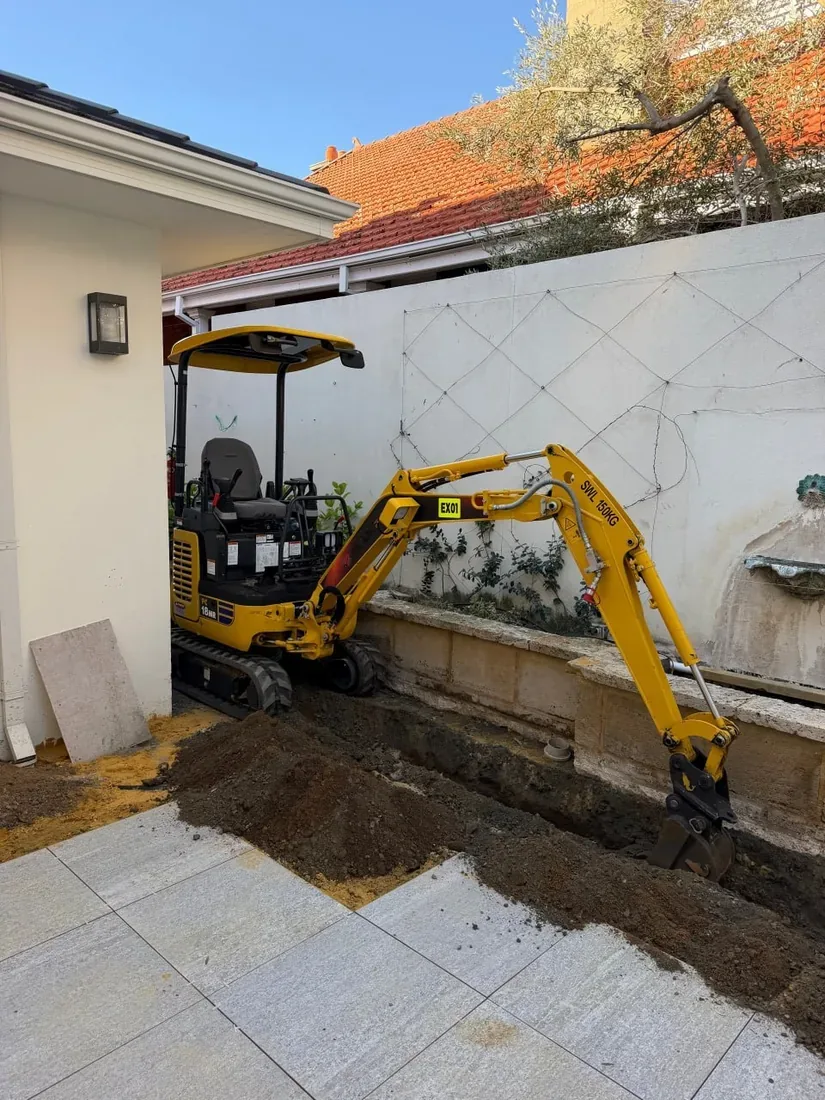
Tight Access Trenching in Peppermint Grove
Trenching for a plumbing line and a reticulation water system, right around a property whose only entry was a gap the machine had to narrow to roughly 990mm to pass.
Read The JobGot A Job Like This One?
We prefer calls, get straight through to the team. Reliable machines. Experienced operators. Jobs done right.