
Buckets and Attachments on Every Machine We Hire
The attachments change what a machine is good for, and how it gets to your block changes whether the job is worth doing at all. Here is what we run and what each part of it is for.
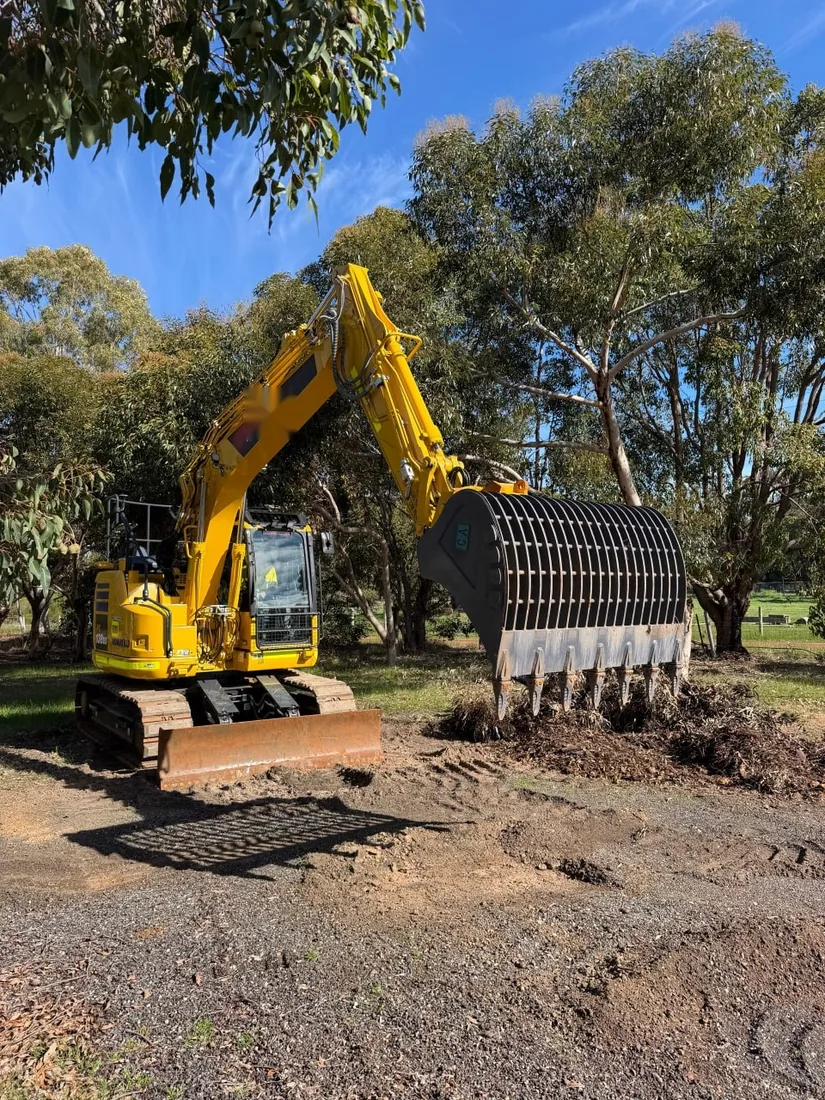
Screening bucket: soil out, stone and rubble held back
A screening bucket is a drum of steel bars on the end of the excavator. Load it, and the fine material falls through while the stone, root and rubble stay in the bucket.
The reason it earns its keep is cartage. Sorting on site means the good soil stays where it is, and only the oversize goes on the truck. On a block with a lot of stone through the topsoil, that is the difference between a few loads out and a lot of loads out.
- Separating stone and rubble out of topsoil
- Reusing the soil already on the block
- Cutting the number of truck loads leaving site
- Cleaning up fill that has rubble mixed through it
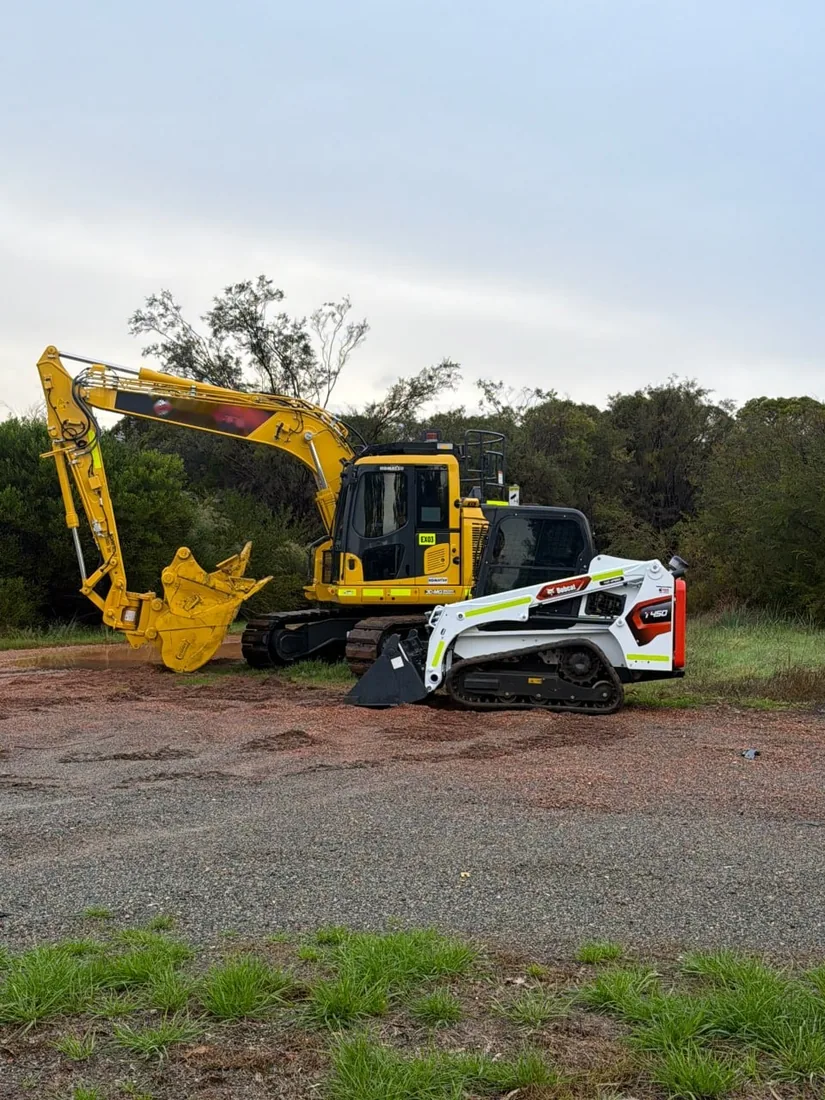
Rake bucket: pulling out roots, sticks and cleared timber
A rake bucket has tines with gaps between them rather than a solid edge. Run it through cleared ground and it drags the roots, sticks and buried timber out while the soil falls back through.
It is the attachment that turns a rough clear into a finished one. Anything left in the ground after the trees come out is what causes settlement later, so raking it through before the level is what makes the block ready to build or plant on.
- Raking roots and buried timber out after clearing
- Tidying a block before levelling
- Stacking cleared vegetation for removal
- Working ground over without carting the soil away
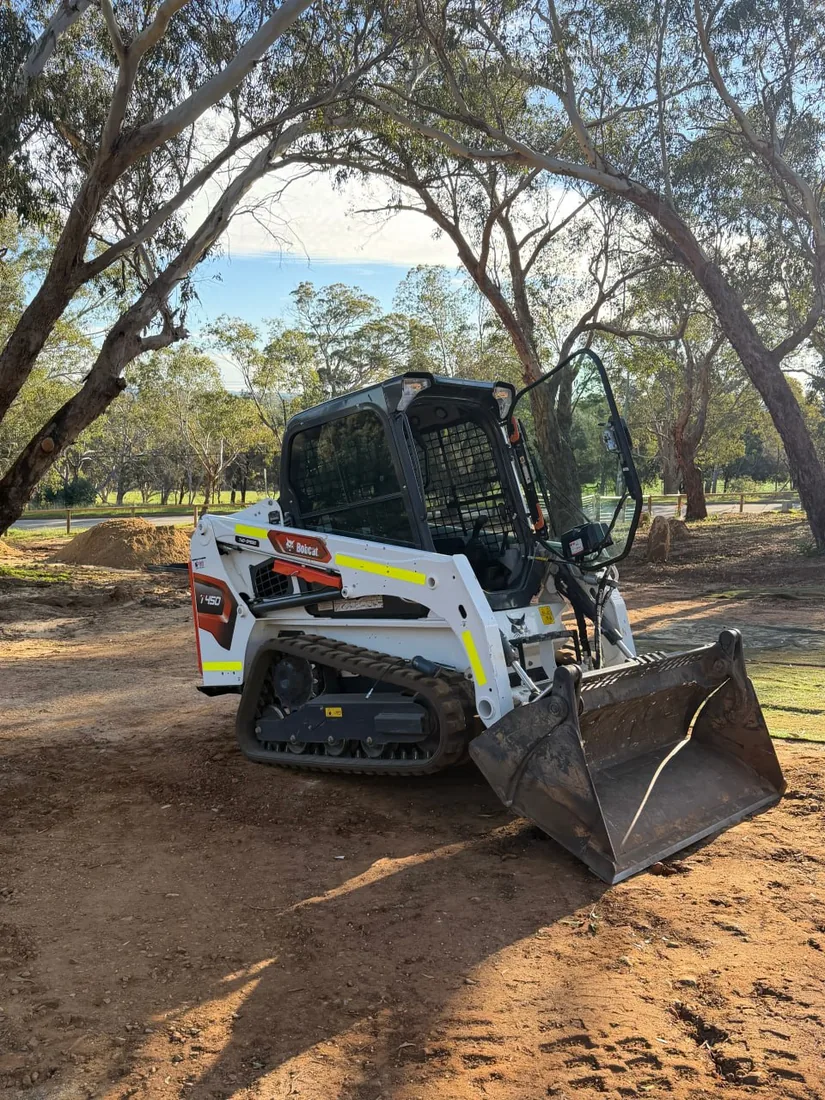
Four in one bucket: working corners and hard up to a wall
A four in one bucket is hinged in the middle. Closed it loads and carries like an ordinary bucket, open it works as a grab or a dozer blade.
The reason it matters on a tight site is corners. A fixed bucket has to be able to swing and tip, so it leaves material in the corners and along the walls that then gets done by hand. A four in one can clamp, push and back-drag right up to a boundary, which is where most of the hand work would otherwise be.
- Cleaning up into corners and hard against walls
- Backfilling along a boundary
- Grabbing and carrying loose material and debris
- Levelling and back-dragging without changing attachment
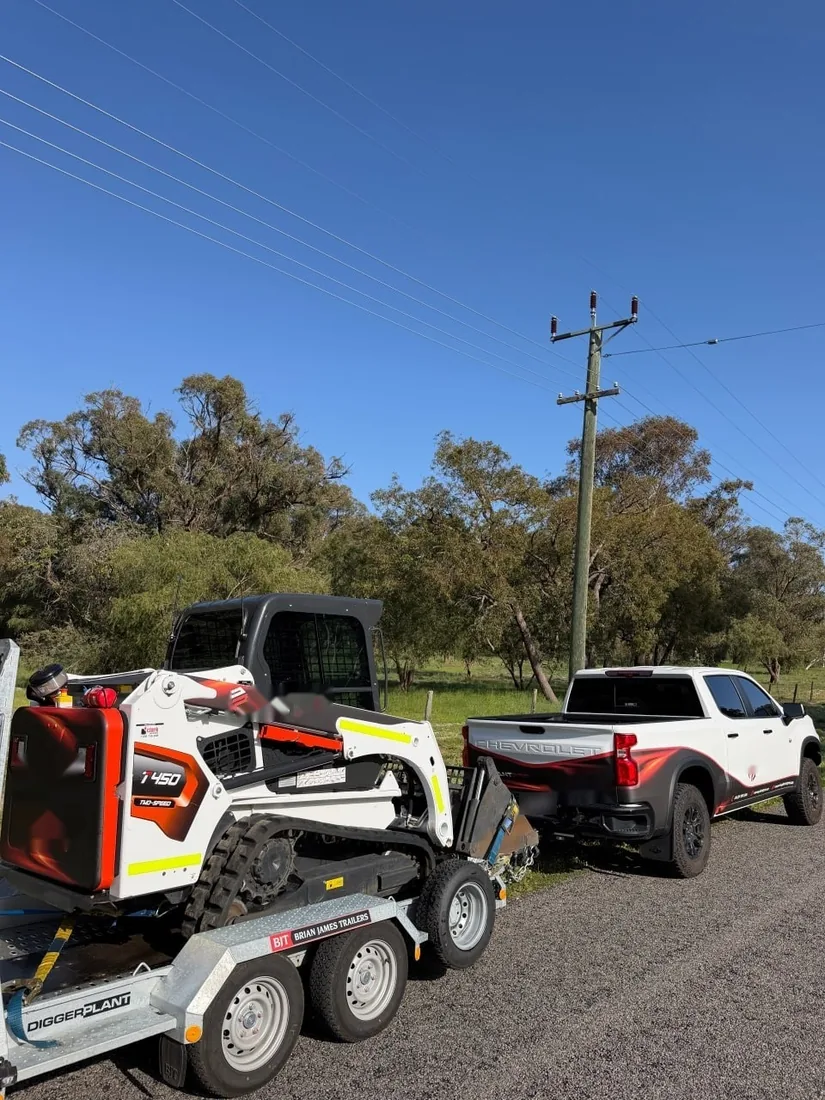
Ute and trailer: the machine gets to the job
The smaller machines go on the trailer behind the ute. That means getting to a job does not depend on booking a float, and it does not depend on there being room for a truck out the front.
For a suburban block that is usually the whole question. A trailer can be dropped and shuffled where a low loader cannot turn around, so a narrow street or a shared driveway stops being the thing that decides whether the job happens.
- Suburban blocks with narrow street access
- Jobs where there is no room to stand a float
- Getting a loader or a digger to site without a separate transport booking
- Shifting between two jobs in a day
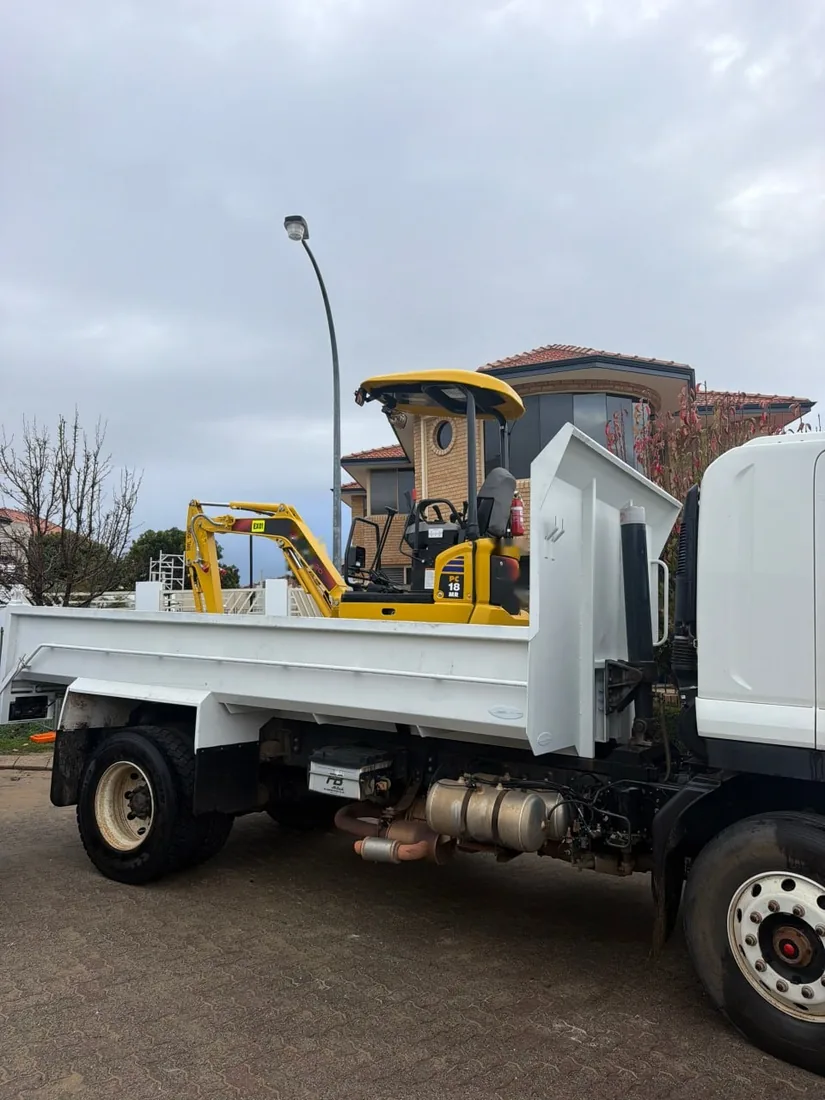
Truck and digger together: the spoil leaves with us
Running the truck and the digger together means the material coming out of the hole is loaded as it is dug, rather than stockpiled on the block and handled a second time.
It also means the site does not fill up. On a job with no room for a spoil heap, which is most suburban blocks, the limit on how much you can dig in a day is usually how much you can put somewhere, not how fast the machine digs.
- Carting spoil off site as the digging goes
- Blocks with nowhere to stockpile
- Trench and footing spoil that has to leave
- Avoiding double handling
And Here Is That Kit On Real Jobs
Everything above is what the machines are built to do. If you would rather see work we have actually finished, that is a separate page, with the awkward bit of each job written up.
4 past jobsNeed One Of These On Your Block?
We prefer calls, get straight through to the team. Reliable machines. Experienced operators. Jobs done right.