AI Overview
Test and tag is a safety check on plug-in gear such as leads, power boards, tools and site office appliances. It is generally done to the AS/NZS 3760 standard, though building sites can have their own rules. Test and tag does not cover the excavator, bobcat or tipper truck, which get servicing and a pre-start check before each shift.
Key Highlights
- Test and tag checks plug-in electrical gear, not the machines
- Leads, power boards, tools, chargers and site office appliances are all covered
- AS/NZS 3760 is the standard for testing electrical gear already in use
- Tracks, buckets, trenches and water are all hard on leads
- An RCD safety switch cuts the power when current leaks to earth
- Check leads, tags and RCDs before the machine starts work
Summarise This Article With AI
Open this article in your AI assistant for a plain-language summary and a straight answer on the machine your job needs.
What Test and Tag Means
Test and tag is a safety check on electrical equipment that plugs into a power point or a generator. A tester looks over the item, its lead and its plug for damage. Then they run electrical tests with a portable appliance tester, a handheld unit made for the job.
If the item passes, it gets a tag showing when it was tested and who tested it. AS/NZS 3760 is the Australian and New Zealand standard for in-service safety inspection and testing of electrical equipment. In-service means gear already out being used on the job.
Building and demolition sites can have their own rules as well, so ask your tester which standard applies to your site.
What a Tester Looks For
- Cuts, nicks or crushed sections along the lead
- Bare wire showing where the lead goes into the plug or the tool
- Bent, loose or burnt pins on the plug
- Cracked tool housings and missing covers
- Tape wrapped over a damaged lead, which hides the damage instead of repairing it
What Test and Tag Covers on an Earthmoving Site
On a dig, the plug-in gear is everything that runs off mains power or a portable generator. Most sites have more of it than people expect.
- Extension leads and power boards running from the generator or the site switchboard
- Power tools such as angle grinders, drills and electric jackhammers
- Battery chargers for cordless tools
- Site office and crib room gear (the crib room is the shed where the crew eats): the kettle, fridge, microwave and heaters
- Electric pumps, such as a submersible pump sitting in a trench to drain the water out
Generators
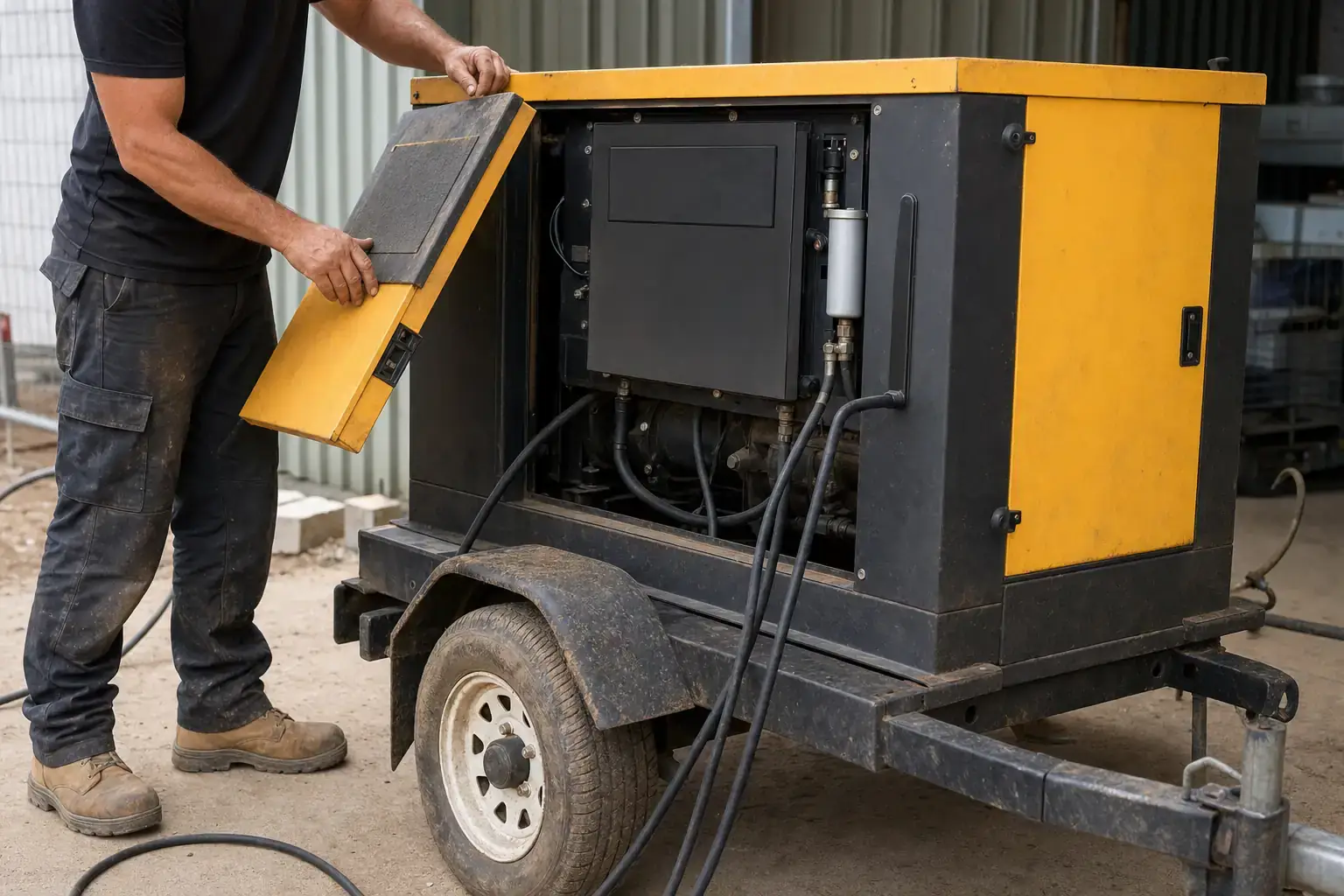
On a lot of digs the power comes from a portable generator. Every lead and tool running off the generator is plug-in equipment and gets tested like any other.
Ask whoever supplied the generator whether its outlets have RCD protection. An RCD, short for residual current device, is a safety switch. It cuts the power when current leaks to earth, for example through a damaged lead or through a person.
What Test and Tag Does Not Cover
Test and tag does not cover the excavator, the bobcat or the tipper truck. These machines run on their own engines and hydraulics, not off a power point.
Machines are kept safe through servicing, repairs and pre-start checks before each shift, which is a separate process from test and tag. If a site rule asks for every piece of equipment to be tagged, ask which items it means before the machine turns up.
Whose Gear Is It?
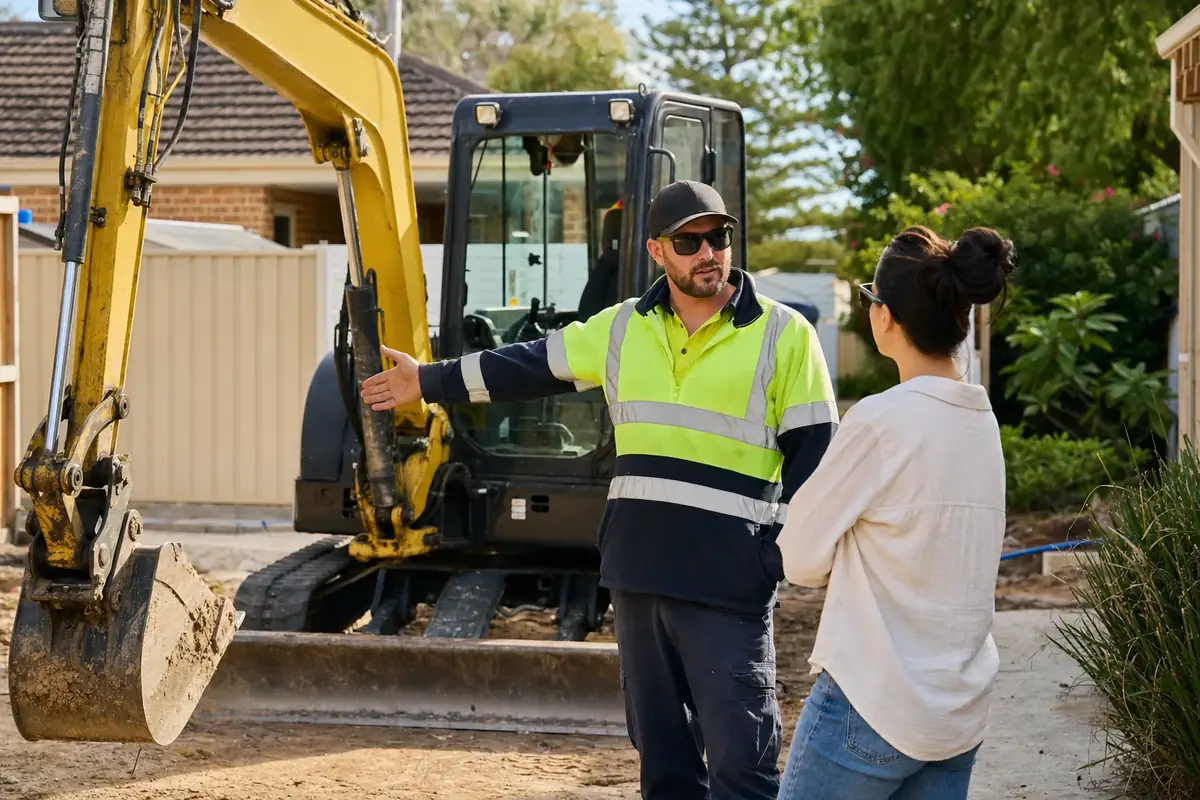
On wet hire, we bring the machine and the operator who runs it. The leads, tools and site office power usually belong to the builder or whoever runs the site. They are the people to ask about tags.
Why It Matters on a Dig
Earthmoving sites are hard on leads. A lead dragged across a trench, run over by a tracked machine or left in a puddle can be damaged where you cannot see it.
Leads and Machines Share the Ground
On a busy site, leads cross the same ground the machines work. A track or a bucket can crush a lead without anyone noticing, and the damage only shows when someone picks it up. Running leads around the edge of the work area, away from where the machine tracks and swings, keeps them out of harm's way.
Water and Dust
A trench or a soakwell hole can fill with water after rain, and an electric pump often sits right in it. Dust and wet clay get into plugs, power boards and tool vents as well.
Both are good reasons to look over the gear more often on a dig than you would in a workshop.
Safety Switches
An RCD will not stop a lead getting damaged, but it cuts the power fast when a damaged lead or tool starts leaking current. Most RCDs have a test button that shows whether the switch trips. A tester with an RCD testing unit can also measure how fast it trips.
A Quick Check Before the Machine Arrives
You do not need a tester on site every morning. A look over the gear before work starts takes a few minutes.
- 01
Look at the Tags
Check each lead and tool has a tag and that the tag is still readable. Put aside anything untagged or unreadable until someone can test it.
- 02
Check the Leads End to End
Unplug the lead and look along its full length for cuts, crushed sections and tape. Look hardest at both ends, where the lead goes into the plug and the socket.
- 03
Press the RCD Test Button
Press the test button on the RCD at the generator or power board. The power should cut straight away, and if it does not, stop using that outlet and get it checked.
- 04
Agree Where the Leads Run
Before the machine starts, agree where the leads go. Keep them clear of the tracks, the bucket and the spoil pile, which is the heap of dirt dug out of the hole.
Take Damaged Gear Out of Use
If a lead or tool looks damaged, unplug it and label it so nobody else picks it up. Keep it out of use until it is repaired and tested again, and never tape over the damage and carry on.
Getting Your Site Gear Tested
A tester can come to the site, test each item and give you a report of what passed and what needs fixing. In Perth, The Local Guys Test and Tag tests tools, leads and RCD safety switches. If your site is in Bunbury or elsewhere between Waroona and Dunsborough, use Harvey Test & Tag.
For the machine side of the job, tell us the job and we will bring the right machine. If you are still deciding who runs it, wet hire vs dry hire sets out the difference. Dry hire means you hire the machine without an operator.
Lining up a job in Perth?
We prefer calls, get straight through to the team.
The Plant Hire Perth Team
Plant Hire Perth is a Perth owned and operated plant hire and earthmoving team. Our operators are Komatsu trained and run the gear themselves, so the advice here comes from real jobs across the metro.
Published 27 October 2026 · Last updated 27 October 2026
Hire The Gear From This Article
Ready to put this into practice? Here are the hire options that suit the work above.