AI Overview
Wet hire includes a Komatsu-trained machine operator in the day rate, making it the right arrangement for homeowners, builders and anyone without an earthmoving ticket. Dry hire is machine-only for licensed contractors who bring their own crew and take on full responsibility for the dig. The decision is not just about cost - it is about who holds the earthmoving licence, who manages the site conditions on the day, and how much risk you are prepared to carry if the ground surprises you.
Key Highlights
- Wet hire includes the machine and a trained operator at a single day rate
- Dry hire is machine-only - you need an earthmoving licence to operate it
- Wet hire is better when ground conditions are unknown or variable
- Dry hire suits contractors with their own experienced crew
- Transport is the biggest cost variable in both arrangements
- Getting the machine size wrong costs a full day regardless of hire type
Summarise This Article With AI
Open this article in your AI assistant for a plain-language summary and a straight answer on the machine your job needs.
What Wet Hire Actually Means
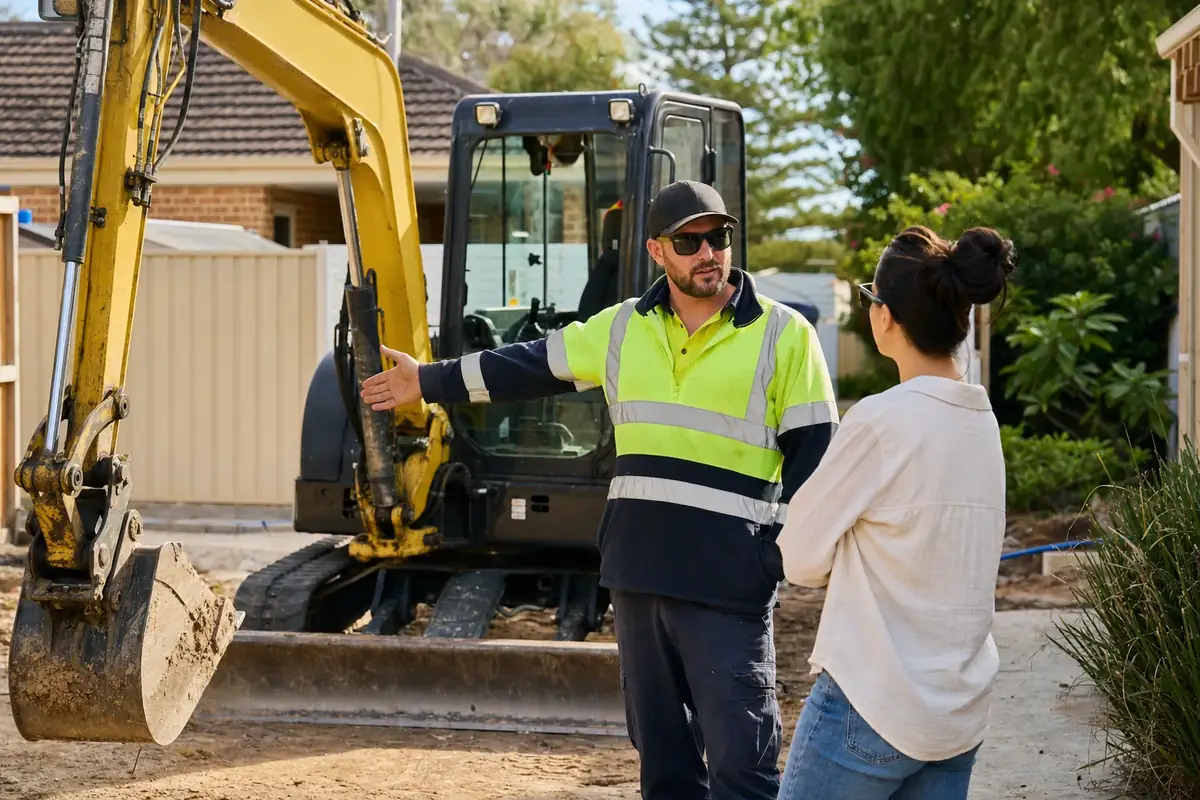
Wet hire means the hire company provides both the machine and the operator. You pay a single day rate that covers the machine, the person running it, travel to site and typically fuel. You do not need an earthmoving licence, and you are not responsible for how the machine is operated.
What You Get With Wet Hire
- Machine delivered to your site with a trained operator
- No earthmoving licence or ticket required on your part
- The operator manages machine positioning, bucket technique and ground reading
- If the ground is different from expected, the operator adjusts on the spot
- If the machine has a mechanical issue, our Komatsu-trained operators sort it themselves
- One point of contact - you brief us, we run the job
Who Wet Hire Suits
Wet hire is the right call for homeowners who need a soakwell installed, a pool dug, a site cut or drainage run and do not hold an earthmoving ticket. It also suits builders who want a machine on site without managing the operator themselves.
It is also the better option when ground conditions are unknown or variable. An experienced operator who has worked Perth soils - sand, clay, limestone, ironstone - makes better decisions about how to approach the dig than a licensed operator who is unfamiliar with the ground.
What Dry Hire Actually Means
Dry hire is machine-only. The plant hire company delivers the machine to your site and you supply the operator. You pay for the machine, the transport to and from site, and fuel. The operator is your responsibility.
What You Need for Dry Hire
- A licensed, competent operator who holds the appropriate earthmoving ticket
- Your own insurance arrangements for machine operation
- Full responsibility for the safe operation and return of the machine
- An understanding of the machine type you are hiring
- Fuel costs are typically on you or charged separately
Who Dry Hire Suits
Dry hire is the right call for earthmoving contractors, construction companies and experienced operators who have their own licensed crew and simply need access to a machine. It is often the more cost-effective option for jobs where a contractor is already staffing a site.
You Need a Licence for Dry Hire
Dry hire requires the operator to hold the appropriate earthmoving equipment licence. Licensing requirements in WA cover excavators and skid steers above certain weights. If you are not sure whether your operator is licensed for the machine you need, wet hire removes that question entirely.
Wet Hire vs Dry Hire: Side by Side
Wet Hire
- Machine plus a Komatsu-trained operator included
- No earthmoving licence required from you
- Operator manages ground conditions and technique
- Mechanical issues sorted on site by our own fitters
- Single quote covers everything - no unknowns
- Best for homeowners, builders, landscapers
Dry Hire
- Machine only - you provide the licensed operator
- Earthmoving ticket required
- Your crew manages all aspects of the dig
- Mechanical issues are a shared responsibility
- Lower base rate but more variables in the final cost
- Best for licensed contractors with their own crew
| Machine | Wet Hire (indicative) | Dry Hire (indicative) |
|---|---|---|
| PC18 1.8t mini excavator | From ~$1,200/day | From ~$500/day |
| PC55 5.5t mid excavator | From ~$1,500/day | From ~$800/day |
| PC138 13.8t excavator | From ~$1,800-2,000/day | From ~$1,100/day |
| Bobcat T450/T590 | From ~$900/day | From ~$400/day |
| 8t tipper truck | From ~$120-150/load | Not available as dry hire |
Transport Is the Same Either Way
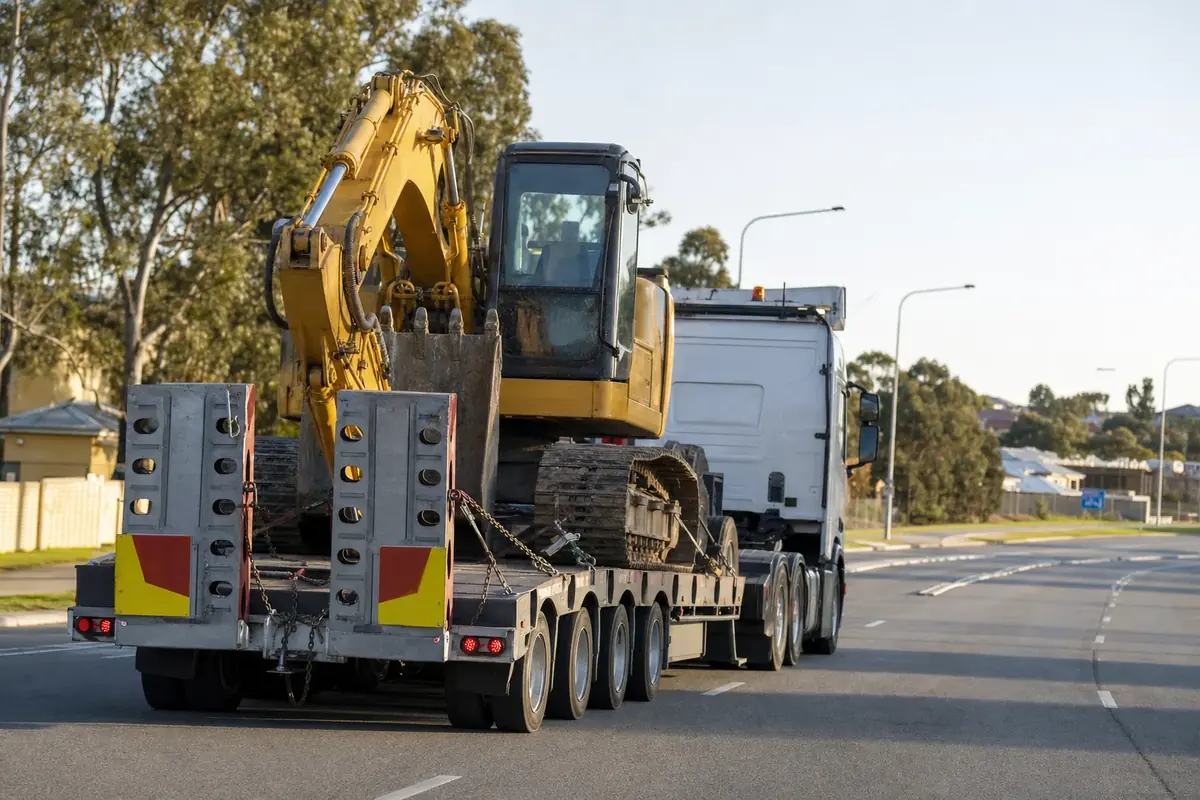
Transport from our Perth metro yard to your site is the biggest variable in both wet and dry hire pricing. A machine moving 60km each way adds significantly more to the day rate than the difference between wet and dry. Always get a quote that includes transport, not just the machine day rate.
How to Choose for Your Specific Job
The decision is simpler than most people expect. Ask yourself three questions before calling for a quote.
- 01
Do You Hold an Earthmoving Licence?
If you or your crew do not hold the appropriate earthmoving ticket for the machine, wet hire is your only option. No licence means no dry hire.
- 02
Do You Know the Ground Conditions?
If the site has unknown soils, previous excavation history or potential for limestone or clay, wet hire means an experienced operator adapts on the fly rather than your crew making that call.
- 03
Are You Staffing the Site Already?
If you have a licensed crew on site for a multi-week job, dry hire often makes more economic sense than paying for an operator you do not need.
Licensing and Ticket Requirements for Dry Hire in WA
Western Australia requires operators of earthmoving plant above certain weights to hold a Certificate of Competency issued through a registered training organisation (RTO). The specific ticket required depends on the machine type and weight class. Operating without the appropriate licence is an OHS offence and voids the hire agreement.
Which Tickets Cover Which Machines
| Machine | Typical Licence Category | Notes |
|---|---|---|
| Excavator over 3t | Certificate of Competency - Earthmoving (Plant) | Required for Komatsu PC55 and PC138 |
| Mini excavator under 3t | High Risk Work Licence (Earthmoving) or operator competency | The PC18 at 1.8t - confirm with WorkSafe WA for current rules |
| Skid steer bobcat | Certificate of Competency or employer competency sign-off | Varies by site and employer safety management plan |
| Tipper truck (rigid) | Heavy Rigid (HR) or Heavy Combination (HC) licence | Depends on GVM of the vehicle |
Check Your Licence Before Confirming Dry Hire
Licensing rules in WA are enforced by WorkSafe WA and requirements do change. If there is any doubt about whether your operator's ticket covers the machine you need, confirm with WorkSafe WA before proceeding. We cannot accept a dry hire booking where the operator cannot demonstrate a current, valid licence for the machine class.
What Happens If an Unlicensed Operator Takes the Controls
An unlicensed operator running a dry hire machine creates liability for the hire company, the site manager and the operator themselves. Our machines are covered under our insurance only when operated by a licenced, competent person as declared in the hire agreement. An unlicensed operator voids that cover entirely.
This is not a technicality - it is a real financial exposure. If the machine causes damage to underground services or injures someone on site while being operated without the correct licence, the hire company's insurance does not respond and the site manager carries the liability personally.
Insurance, Damage Waivers and Who Carries the Risk
One of the clearest practical differences between wet hire and dry hire is who holds the risk if something goes wrong. Understanding this before you sign the hire agreement matters more than most customers realise.
Risk in Wet Hire
Under wet hire, the machine is operated by our own Komatsu-trained operator. The operator's decisions on site - how the bucket is directed, where the machine is positioned, how the dig is approached - are our responsibility. If the machine damages an underground service that was accurately located and marked, the question of liability is assessed based on standard earthmoving practice, not on who was told to dig.
Risk in Dry Hire
Under dry hire, your operator runs the machine and your operator's decisions become your liability. If the machine hits a gas line, a communication conduit or a water main, the responsibility for damages sits with the dry hire customer. Damage waivers in hire agreements typically cover accidental mechanical damage to the machine itself - they do not cover third-party liability claims arising from site incidents.
What A Damage Waiver Covers, And What It Does Not
A damage waiver reduces or eliminates your liability for accidental damage to the hire machine itself during normal operation. It does not cover damage from misuse, operation by an unlicensed person, or deliberate acts. It does not cover damage to property, underground services or third parties on the site.
Always Locate Services Before Digging
Whether you are on wet hire or dry hire, dial before you dig. Western Australia requires service notification before excavation under the Dial Before You Dig system. A Komatsu-trained operator on wet hire still needs your service location information before starting. The responsibility to notify and locate sits with the person managing the site.
| Risk | Wet Hire | Dry Hire |
|---|---|---|
| Machine mechanical damage | Shared - our operator, our machine | Your operator, your liability |
| Third-party property damage | Assessed based on operator decisions | Your operator's decisions, your liability |
| Underground service strikes | Shared - depends on location data provided | Your responsibility if services were located |
| Operator injury on site | Our operator, our workers comp | Your operator, your obligation |
| Unlicensed operator scenario | Not applicable - we supply operator | Voids insurance - do not do this |
The Perth Jobs That Consistently Suit Wet Hire
Wet hire is not just for homeowners without a licence. There are categories of Perth earthmoving work where wet hire is the better choice even for contractors who technically have the option of dry hire. Ground conditions, site access and job complexity all factor into the decision.
Tight Access and Side-Gate Jobs
Residential jobs that involve getting a machine through a side gate or into a confined rear yard require an operator who can judge clearances precisely. An experienced Komatsu operator who works these machines daily makes those calls with confidence. A licensed operator who uses excavators occasionally may be technically qualified but less comfortable in a tight spot.
Unknown Ground Conditions
Perth soils vary substantially within short distances. Limestone can appear at 300mm in some suburbs and not surface until 2m in others. Old fill sites, former orchard lots and subdivisional blocks with previous activity on them often contain material that surprises even experienced operators. Wet hire means a Komatsu-trained operator who digs in Perth regularly is the one making judgement calls when the ground changes.
Specialist and Non-Standard Work
Jobs like the 50-tree grass tree harvest described in our other article, rock breaking in confined spaces, or deep service trenching near existing structures are all cases where operator skill and machine familiarity directly affect the outcome. Wet hire puts our most experienced operators on those jobs rather than leaving the result to whoever the customer can find on short notice.
- Side-gate and rear-yard access: experienced operators navigate tight clearances faster
- Unknown ground: limestone, old fill and clay surprises are handled by operators who have seen them before
- Rock breaking: hydraulic hammer operation requires technique as much as machine power
- Grass tree harvesting: precision work that benefits from trained machine control
- Service trenching near structures: operator skill affects how close you can safely work
- Soakwells in confined lots: machine positioning and depth control matter more than raw power
Common Mistakes People Make With Dry Hire
Dry hire works well when the arrangement is set up correctly. Most problems come from one of a handful of predictable mistakes that turn a cost-effective hire into an expensive one.
- 01
Choosing the Wrong Machine Size
Booking a machine that is too small for the ground conditions because it looks cheaper on paper. If the PC18 1.8t takes three days on hard limestone where the PC55 5.5t finishes in one, the cheaper machine is not actually cheaper.
- 02
Not Confirming the Operator's Licence
Assuming a crew member holds the right ticket without checking. An unlicensed operator voids the hire agreement and the insurance cover. Confirm the licence class before the machine arrives.
- 03
Underestimating Transport
Booking on machine day rate alone without confirming the transport component. A dry hire PC138 travelling 60km each way costs significantly more to mobilise than the machine rate alone suggests.
- 04
Not Providing Service Location Data
Letting the operator start without confirmed underground service locations. Under dry hire, a service strike is the customer's liability. Dial Before You Dig and have the Dial Before You Dig reference number ready before the machine starts.
- 05
Underestimating Fuel Consumption
Large excavators burn more fuel than most customers expect. A PC138 running hard on a full site cut can use 15-25 litres per hour. Factor fuel into the budget before the job starts.
Not Sure Which to Choose? Call us First
Tell us the job details - what you are digging, how deep, what access you have, and whether you have a licensed operator. We'll tell you which arrangement suits the job and which machine size finishes it fastest. That call takes five minutes and saves the guesswork.
Lining up a job in Perth?
We prefer calls, get straight through to the team.
The Plant Hire Perth Team
Plant Hire Perth is a Perth owned and operated plant hire and earthmoving team. Our operators are Komatsu trained and run the gear themselves, so the advice here comes from real jobs across the metro.
Published 26 June 2026 · Last updated 28 June 2026
Hire The Gear From This Article
Ready to put this into practice? Here are the hire options that suit the work above.